A Girlscouts Guide To Radiation Poisoning
There was a period of time in this country where, believe it or not, science was respected. Trusted. Some third thing to complete the whole "rule of threes."
Science was considered crucial, not just to this country, but to the world at large. They used to sell chemistry sets to kids. That was a normal gift you could give a child for a good number of years. And, of course, what good is a set if you don't know how to use it, right? So obviously, you'd need to equip said child with none other than the Golden Book of Chemistry Experiments. Written by Robert Brent and published around 1960, this is a famous children’s science book designed to encourage setting up a home laboratory with simple household items. However, many experiments are now considered too hazardous for unsupervised children, and it is instead now largely known for being a rare, classic, yet dangerous, educational tool.
And who's to say they're wrong? Children are nothing if not impressionable, often acting out what they see or discover for themselves. But there's something else besides the book that wasn't exactly safe for kids, something else children were given that could've potentially endangered their health, and that is a breakfast cereal. Okay, not the cereal proper, but moreso the radioactive ring they were gifted as a prize in the box.
Save the children? More like irradiate the children.

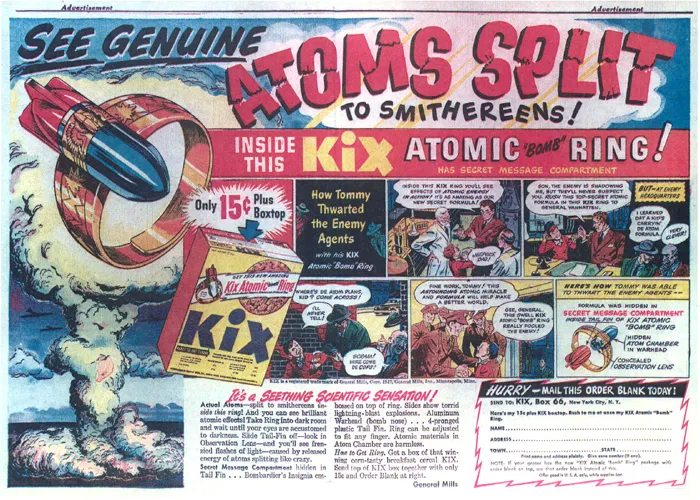
In the late 1940s, Kix Cereals sold one of the most dangerous promotional items in history: the Lone Ranger Atom Bomb Ring. Advertised as a "seething scientific creation," this ring allowed you to view tiny flashes of light caused by polonium alpha particles hitting a zinc sulfide screen. But that wasn't all, because when you removed the red base (which was also a "secret message compartment") and let your eyes adjust to the darkness, you'd be treated to scintillations that looked like miniature explosions.
That's right, for a meager 15 cents and a boxtop, this ring promised to reveal what was described as the "released energy of atoms" inside a chamber labeled as "perfectly safe." But, of course, anything that's put into quotation marks is obviously the opposite, because there was one little problem...the damn thing was radioactive. See, the ring in question actually contained Polonium-210, one of the deadliest radioactive substances known to man. In hindsight, the Lone Ranger Atom Bomb Ring is a shocking reminder of how little we understood about the risks of radiation in the mid-20th century, not to mention the lengths a company might in fact go to simply in the name of selling products to children. And while, these days such a promotional item would be outright unthinkable, in the post-World War II era, it was sold as a cool piece of technology.
Radiation. Part of a well-balanced breakfast.
But this wasn't even the only toy featuring radiation that we just handed to children, oh no, because that would be ignoring the Gilbert U-238 Atomic Energy Lab. This was an actual radioactive toy and learning set sold in the 1950s, because someone apparently thought "Well, okay, a new decade, surely it's safe to give kids radiation now, right?". This set, priced at $49.50, came with four samples - yes, you read that correctly, a whopping FOUR SAMPLES - of uranium-bearing ores (autunite, torbenite, uraninite and carnotite), alongside a Geiger-Mueller radiation counter and other related tools.
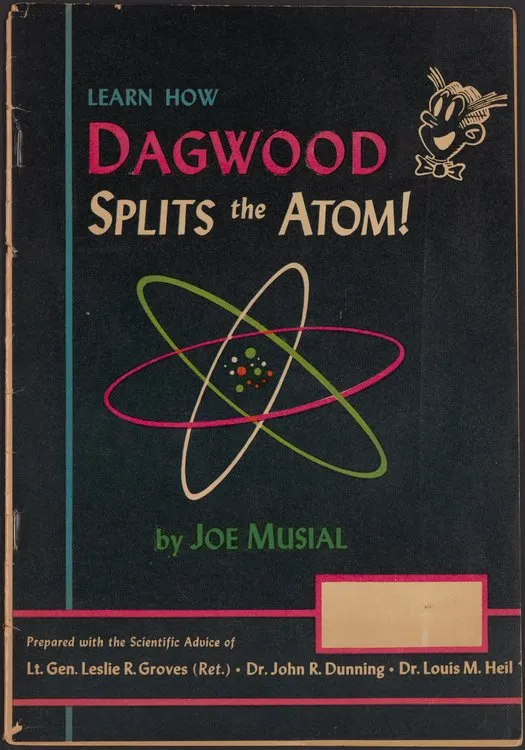
It also, perhaps in a ploy to entice children further, came with a comic book featuring the character Dagwood from the comic strip "Blondie", titled, appropriately, "Learn How Dagwood Splits the Atom", and I gotta tell ya, I don't think a guy who works as an office manager for a construction company is capable of such a feat, I'm sorry. Sadly, the title of the comic wasn't more realistic, such as "Dagwood Gets Sick from Radiation Poisoning and Fucking Dies". Probably a little more true to life. And, as if this whole thing wasn't weird enough, the comic was written in conjunction with General Leslie Groves, the honest to god director of the Manhattan Project. The toy lab set, created Alfred Carlton Gilbert - who, for the record, was an athlete, magician and toymaker, a stranger resume I don't think I've ever seen - believed that toys were the foundation in building a solid American character. In fact, he was even dubbed "the man who saved Christmas", during WW1 when he convinced the US Council of National Defense not to ban toy purchases during Christmas time. This guy really should be more remembered, if for nothing else than as an example of fame through sheer willpower.
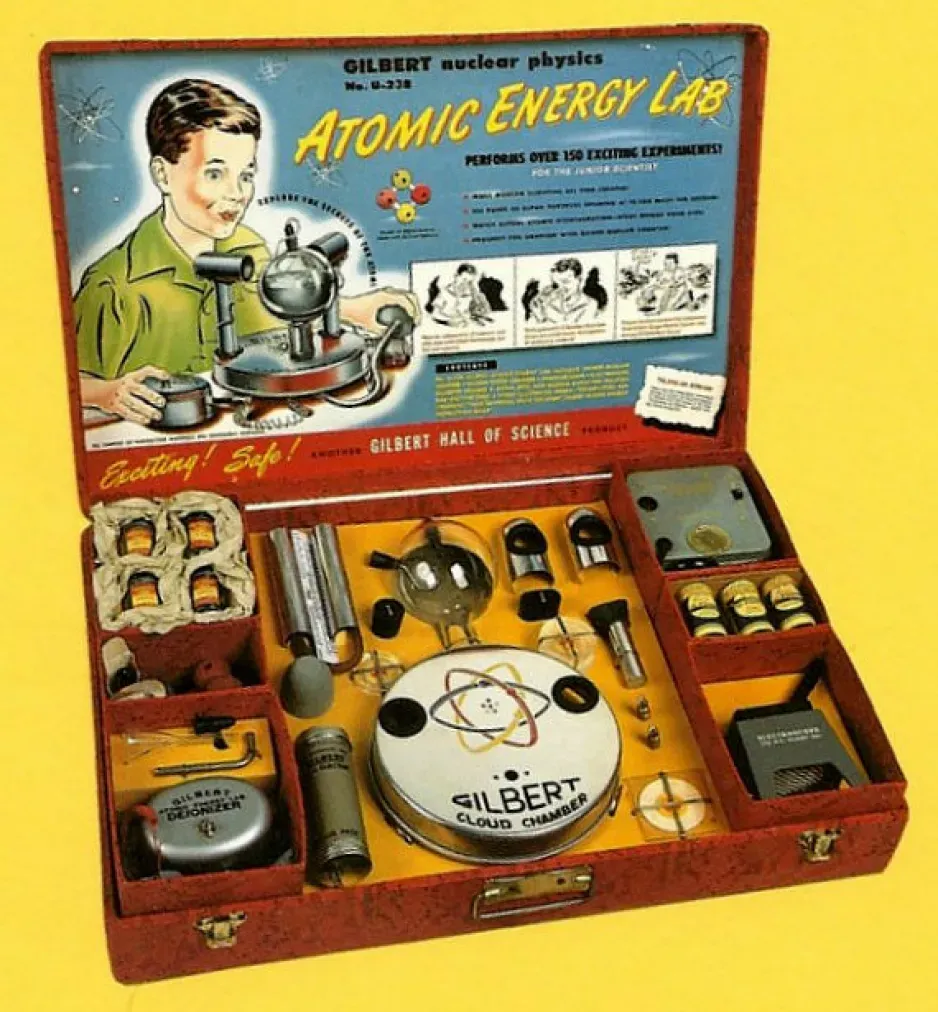
While the Atomic Energy Lab was only one of a dozen chemical reaction kits on the market, he pushed the idea to parents that the use of chemical reactions directed their children toward a potential career in science and engineering, instead of an inevitable hospital stay. He later claimed that the government themselves encouraged the development of the toy because it believed the lab would aid public understanding of atomic energy and emphasize its constructive aspects. The lab contained a cloud chamber which allowed the viewer to watch alpha particles traveling at 12,000 miles per second, a spinthariscope that showed the results of radioactive disintegration on a fluorescent screen, along with an electroscope that measured the radioactivity of different substances in the set.
And the thing is, while Gilbert claimed none of the materials could prove dangerous, he was actually kind of right. See, in a write up later on by IEEE Spectrum, they actually describe the likely radiation exposure as "minimal, about the equivalent to a days UV exposure from the sun", provided the radioactive samples weren't removed from their respective containers. But you know what? Gilbert was right about something else too, and that's that these books, these toys, they really did encourage young people to get interested in science and engineering.
If you don't believe me, maybe we should talk about David Hahn.
I was never in the girl scouts.
It's actually kind of a secret shame of mine to admit, especially since - especially growing up - I was such an outdoorsy kid. I loved going camping, I hiked Half Dome when I was in elementary school, and I love bird watching. But it just had too much a social aspect and responsibilities I couldn't handle that I knew it would never be a good fit for me. And while I remember doing science fairs in school, I can say with absolute certainty that I never once tried to build a nuclear reactor. The same can't be said for David Hahn.
Hahn was, for all intents and purposes, a rather ordinary young man. He played sports, Basketball and Soccer, hung out with his friends, and joined the boy scouts, and then, his stepmothers father, an engineer for GM, presented David with a book when he was ten years old. The Golden Book of Chemistry Experiments. David was hooked, and by the tender age of twelve, he began devouring his fathers college chemistry books without difficulty. He set up a small laboratory in his bedroom at his fathers, bought countless pieces of equipment ranging from Bunsen burners to test tubes, and, by fourteen, had fabricated nitroglycerine.
After being banished to the basement thanks to one too many experiments gone wrong in his bedroom, he continued conducting experiments, only growing more and more brazen with his efforts until, one night, while his folks sat in the living room, something under the house exploded. In the basement they found David, lying semiconscious on the floor with his eyebrows smoking. Apparently, and I'm not sure how this is possible considering the amount of chemistry knowledge he'd accrued up to this point, he was unaware that red phosphorus was pyrophoric and had accidentally ignited it, causing the situation to quite literally blow up in his face. Thankfully, aside from some minor eye problems, David was relatively unharmed. As a result, they outright forbade David from experimenting in the house, understandably so, one might say, instead pushing him to his mothers potting shed.

But remember how I said David was in the boy scouts? Well, this might surprise you, but they have a plethora of merit badges one can earn, and one of those badges just happens to be in Atomic Energy. He was awarded this badge on May 10th, 1991, five months before turning fifteen. To earn said badge, he built a model reactor using common household items. But a model, as everyone would soon find out, wasn't enough. But remember how I said David was in the boy scouts? Well, this might surprise you, but they have a plethora of merit badges one can earn, and one of those badges just happens to be in Atomic Energy. He was awarded this badge on May 10th, 1991, five months before turning fifteen. To earn said badge, he built a model reactor using common household items. But a model, as everyone would soon find out, wasn't enough.
On June 26th, 1995, eleven men, dressed in ventilated moon suits, descended upon the shed David was working within, dismantling it with electric saws and stuffing things into large steel drums with radioactive warning signs on them. Needless, to say, the neighbors were concerned. See, the shed had become dangerously irradiated and the areas 40,000 residents were now potentially at risk as a result. Why? Well, David had attempted his magnum opus; to build a nuclear breeder reactor in the shed as part of his merit badge project.
And the worst part of it all? David spiraled into depression as a result of years of hard work being taken from him. I won't go into the lengthy specifics of what went down once the government itself got involved, if you'd like to learn more about that then this Harpers Magazine article has an intensely deep writeup, but needless to say it was bad. Necessary, certainly, but bad, especially for his mental health. All his work, his effort, all of it was gone, taken from him, deemed dangerous (which, arguably, it was). He gained the nickname "The Radioactive Boyscout" and, to top it all off, the scout leaders attempted, unsuccessfully, thankfully, to deny him his Eagle Scout status, stating that they believed his efforts to attain it had outright endangered the community. David Hahn died almost a year ago now, at the age of 39, in his hometown in Michigan as an accidental result of intoxication of a few various substances. His only crime? Loving chemistry.
Better than outright force feeding children irradiated cereal.
In the late 1940s, Quaker Oats and Cream of Wheat were going at it for domination in the cereal market. Cereal, which has never really been considered an out and out 'healthy' food, was undergoing a series of experiments which revealed that plant based grains - which cereal is made from - contained naturally high levels of phytate, which is an acid that inhibited the absorption of iron and calcium. So, when MIT decided to conduct their own research into how the human body absorbs essential minerals and vitamins, Quaker, seeing a chance to obtain an edge over their competitor, offered to fund the study. Now, on the surface, this doesn't sound like a big deal. Until you realized that experiments require participants, and the participants in this case happened to be 40 children from the Fernald State School, an institution for the developmentally disabled, whom were then fed cereal laced with radioactive tracers.
To be fair, it wasn't like Quaker Oats was the only villain here, everyone was at fault. For starters, the school itself, which was originally called a "school for the feeble minded" , was under the thumb of one Walter E. Fernald, for whom it's named after, who just happened to be a leading proponent in the eugenics movement in the US. There were 2500 children there, but not all of them were even developmentally challenged. Some were simply transferred from shelters, while others had just been outright abandoned by their parents. On top of that, MIT could've stepped back at one point and said, "Hey, wait a minute...this is kind of evil." But they didn't. Nobody did. And, as a result, children were fed copious amounts of Quaker Oats cereal, while MIT tracked the natural absorption of iron and calcium using radioactive tracers. And how did they entice the kids to do such a thing? Simple. They branded the whole thing as a "Science Club" promising children special privileges.
40 years later, in a Senate Hearing, one of the seven children who'd been coaxed into joining, stated, "They made me feel special, they gave me a Mickey Mouse watch."
And if that isn't an applicable analogy for America as a whole, then I don't know what is.
There were 3 sets of experiments, and while the first two were simply feeding children breakfasts containing radioactive tracers, the third test seemingly dropped the whole breakfast facade and instead opted to just outright inject nine of the children with syringes full of radioactive calcium to understand what happens to calcium in the bloodstream. After the tests concluded, MIT ended their partnership with the school, having gotten what they needed from the data, and Quaker Oats got to use claims of "high in iron" as a vital component in their advertising campaigns. Everyone wins, so long as you're not one of the children being fed radioactive cereal. Now, there is aftermath to this, plus a lot more in depth information, so for those of you interested, I highly recommend you check out this piece by Zachary Crockett in 2015 over at Priceonomics, because it's pretty great, and I definitely sourced some info from it.
Ableism has always existed in this country, and likely always will sadly, but ableism to this extent was just everyday life back then. Utilizing those you deemed less human for science experiments was just part of the culture, and
Suddenly a prize ring in a cereal box doesn't sound too bad does it?
There's a ferris wheeel in Chernobyl.
I don't know why, but this just feels like the quintissential iconography for a childhood steeped in radiation. The ferris wheel is located in the Pripyat amusement park located in the Ukraine, and was set to have its grand opening on the first of May, 1986, but this never came to fruition because on April 26th the Chernboyl disaster occurred only a few kilometers away. Meanwhile, children exposed to radiation from Chernobyl, particularly in either Belarus or the Ukraine, experienced significant health issues, unsurprisingly. These range from thyroid cancers to birth defects to genetic damage, along with stunted growth and immune disorders. Other children suffered from higher rates of leukemia, respiratory diseases and cardiovascular issues. And, perhaps in a true showing of the cruelty of genetics, research in 2026 shows that the impact is transgenerational, with increased genetic mutations found in children born to parents who were exposed.
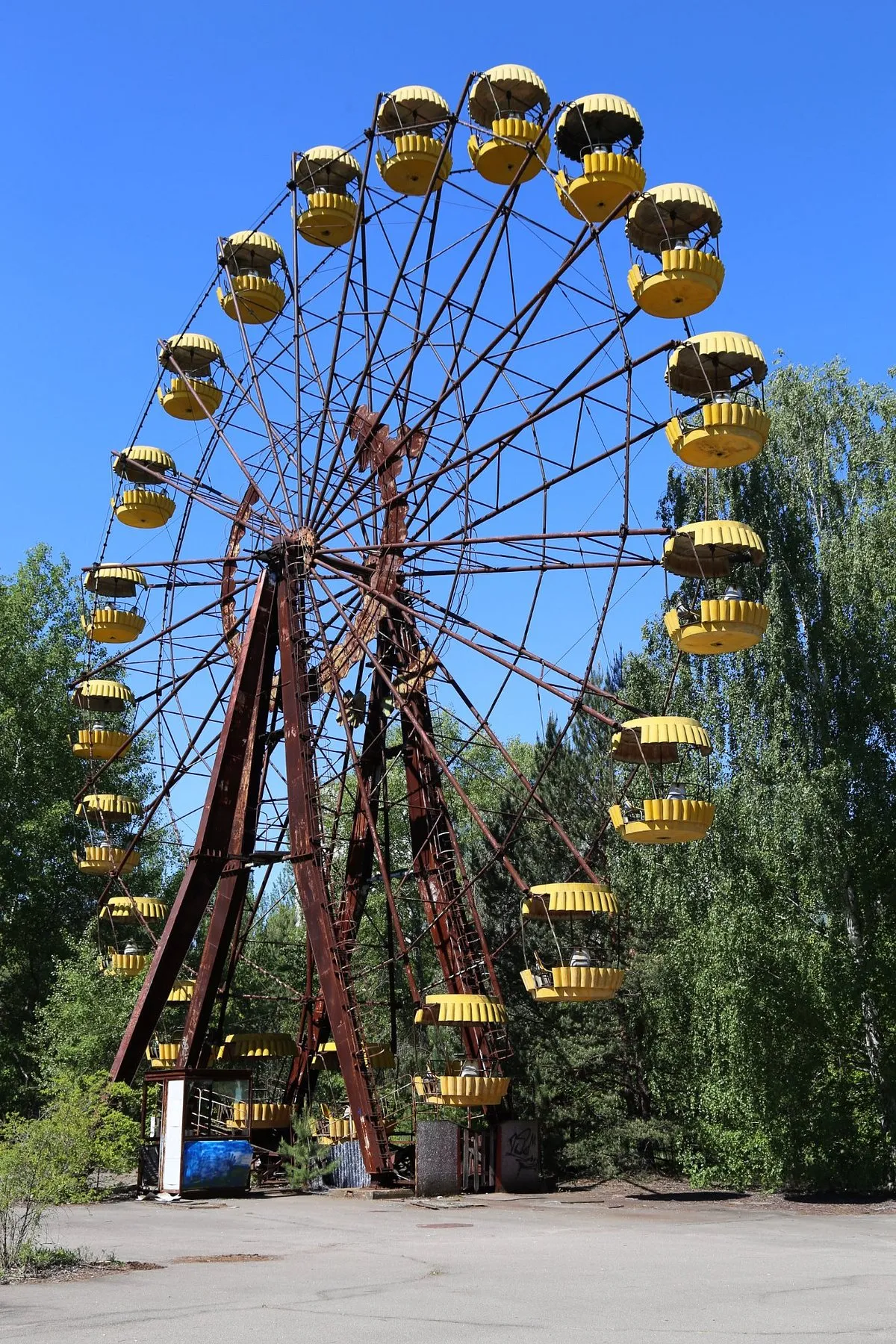
Ferris wheels are often associated with childhood nostalgia. Commonly among the first rides a kid will go on at a carnival or an amusement park of some kind, they're extremely representative of child like innocence and wonder. So, for something so attached to that to be so close to a nuclear meltdown of such drastic proportions, it's almost fitting, in a weird sort of way. These days radiation is mostly a problem primarily through natural background exposure such as increasing medical imaging. CT scans in particular have doubled per capita radiation exposure, beecoming a primary source of radiation for many, and children are at higher risk to be affected by this since they're still growing.
There's still radioactive waste from Cold War era weaponary to be dealt with, creating long term storage issues, and as for places such as Chernobly and Fukushima, these areas - and those adjacent - continue to be contaminated, requiring management of exclusion zones. But at least the ring, and even Chernobyl, were accidents (or, at the very least, not malicious). Hell, even the Quaker Oats experiment - three words I never thought I'd say together - was awful, yes, but awful on a small scale. But if you really want to talk about exposing children to radiation, you can't top Hiroshima and Nagasaki.
On August 6th and August 9th the United States dropped two atomic bombs on the Japanese cities of Hiroshima and Nagasaki respectively. These bombings, which remain to this day the only use of nuclear weapons in armed conflict, resulted in an estimated 150,000 to 246,000 deaths by the end of 1945, most of them civilians. The child fatalities alone, documented by the Children's Peace Memorial, cited 38,000 dead, while appoximately 6500 children lost both parents or had parents too injured to take care of them. And perhaps the most ironic part of all of it was that the bomb dropped on Hiroshima was named the "Little Boy". No matter which way you slice it, children and radiation just seem to go together.
Personally, I think all the children affected by the Chernobyl disaster deserved at least one free ride on the ferris wheel. They're already irradiated, what more damage can truly be done. They're owed that much at least. And I don't know about you, but I'll be watching my cereal companies much more closely from now on. In particular, I think General Mills might have it in for me.
My Chex has been looking mighty suspicious as of late.